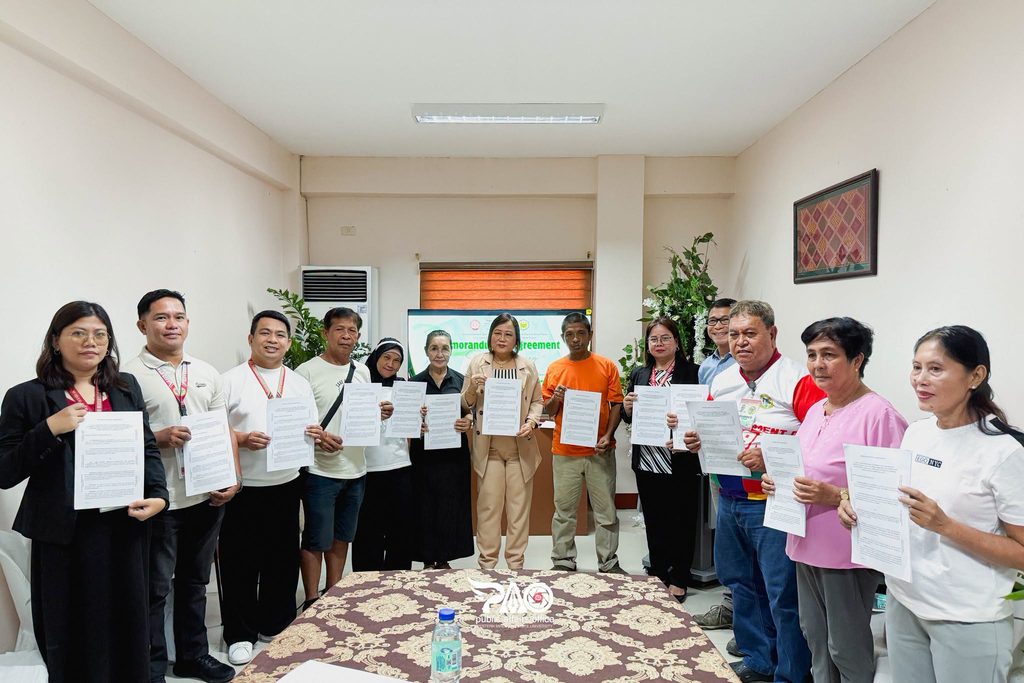
Western Mindanao State University (WMSU), through its College of Agriculture, has partnered with Cassava Farmers’ Associations in Zamboanga City through the signing of a memorandum of agreement (MOA) on October 31, 2026, at the Office of the President Conference Room to strengthen farmers’ knowledge and skills in cassava processing and product development.
Under the agreement, the university, through the Food Technology Department of the College of Agriculture, will provide technical expertise, research support, training, and extension services to help farmers enhance their capabilities in processing cassava into various value-added products.
The partnership also supports the university’s research and extension project, “Development and Commercialization of Enriched Instant Cassava-Based Pasta for Disaster Preparedness in the Zamboanga Peninsula.” The project aims to develop nutritionally enriched cassava-based food products while promoting food security, disaster preparedness, and sustainable livelihood opportunities for local farming communities.
WMSU President Dr. Ma. Carla A. Ochotorena emphasized the agricultural and economic potential of cassava, locally known as kamanting, describing it as a versatile and resilient crop that provides food, income, and raw materials for various industries.
“With the right technologies, improved farming practices, and stronger market linkages, cassava can become an even greater driver of agricultural productivity, livelihood generation, and rural development,” Dr. Ochotorena said.
She also expressed hope that the collaboration would extend beyond the signing of the agreement and translate into tangible benefits for farmers and the local agricultural sector.
“I pray that this partnership will grow beyond the agreement we sign today and lead to more productive farms, stronger livelihoods, and a more sustainable agricultural sector in Zamboanga City,” she added.
Meanwhile, College of Agriculture Dean Dr. Elderico Tabal welcomed the farmer-participants and expressed his appreciation to the university president and the individuals who helped make the partnership possible. He also reaffirmed the college’s commitment to supporting farmers through research-based interventions, technical guidance, and capacity-building activities that can improve their production and processing practices.
City Agriculturist Arben E. Magdugo, also thanked WMSU for its continued support for the farming community. He recognized the importance of the university’s assistance in equipping farmers with the knowledge and skills they need to improve their livelihoods and build a better future for their families.
Through this partnership, WMSU strengthens its commitment to bringing research and technology closer to local communities, supporting agricultural innovation, and creating practical opportunities for farmers in the Zamboanga Peninsula. (AAS, PAO)