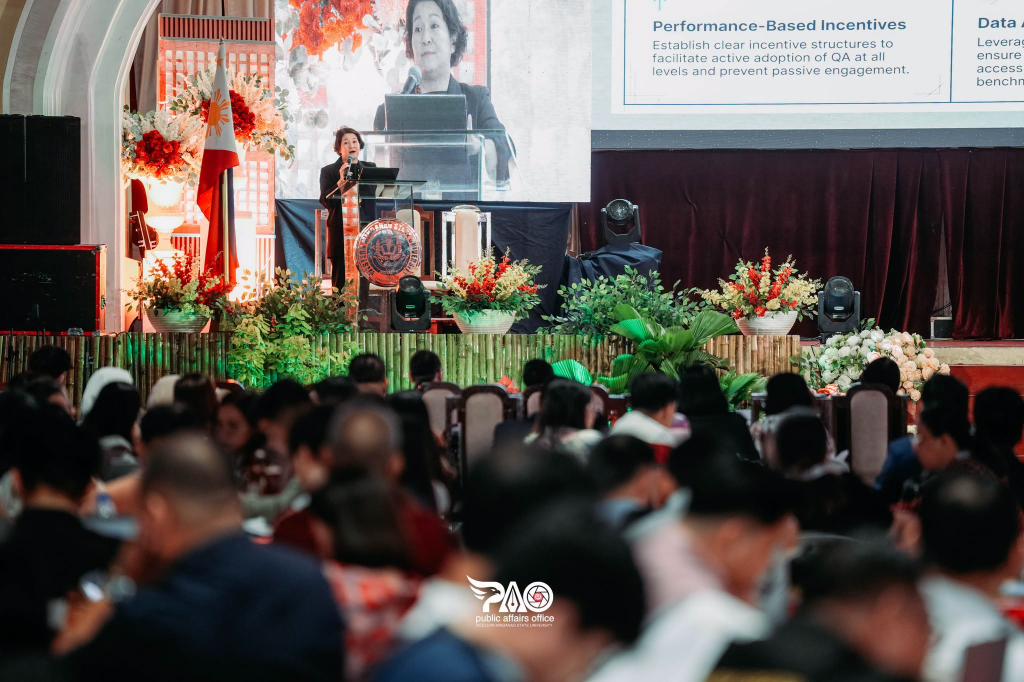
Institutional alignment, quality culture, and data-driven decision-making took center stage on Day 2 of the 3rd Workshop on University’s Internal Quality Assurance (IQA) Implementation in the Philippines Utilizing the AUN-QA IQA Management Toolkit Version 1.3 on September 16 at the Dr. Juanito Bruno Gymnasium.
The second-day sessions covered Blocks 3 to 8 of the AUN-QA IQA Management Toolkit, focusing on Vertical and Horizontal Alignment, Integration and Simplification, Staffing and Capacity Building, Incentive and Recognition, Driving Quality Culture, and Leverage Ranking and Data.
Discussions centered on aligning institutional strategies with university operations, integrating quality assurance into regular processes, strengthening personnel competencies, recognizing contributions to quality, fostering shared ownership of quality and leveraging institutional data for evidence-based decision-making.
The sessions also presented practical approaches to strengthening IQA implementation, including coordinated data systems, automated dashboards, competency development, mentorship, recognition mechanisms and data governance anchored on people, process and technology.
The Day 2 discussions underscored the importance of connecting institutional strategies, people, processes, quality practices and data to establish a more integrated and sustainable internal quality assurance system in higher education institutions.
The three-day workshop continues to provide participating institutions with practical approaches to implementing and enhancing IQA through the AUN-QA IQA Management Toolkit Version 1.3. (MKMQuin, PAO)