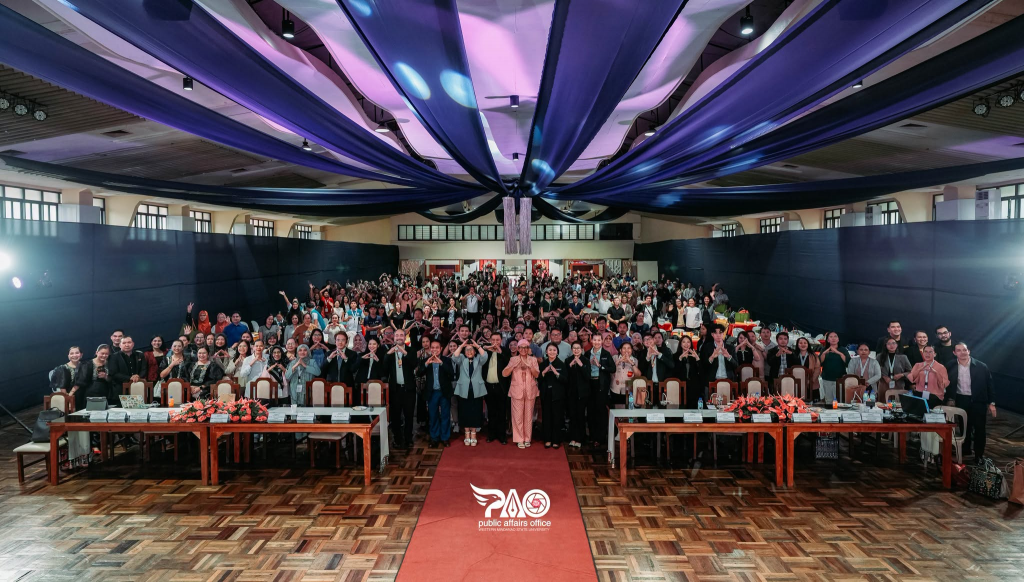
Around 300 higher education representatives from across the Philippines and the ASEAN region developed institutional action plans to strengthen internal quality assurance (IQA) systems during the 3rd Workshop on University’s IQA Implementation in the Philippines Utilizing the AUN-QA IQA Management Toolkit Version 1.3, which concluded on September 17 at the Dr. Juanito Bruno Gymnasium.
Held from September 15 to 17, the workshop focused on applying the AUN-QA IQA Management Toolkit Version 1.3 through discussions, collaborative activities, and action planning.
The first day introduced the IQA Management Toolkit and its role in strengthening institution-wide quality assurance mechanisms.
Day 2 focused on the toolkit’s building blocks, including institutional alignment, integration and simplification, staffing and capacity building, incentive and recognition, driving quality culture, and leveraging rankings and data.
On Day 3, participants developed institutional action plans based on the workshop’s key lessons. The plans considered strategic priorities, required resources, IQA processes, measurable outputs, expected outcomes, and long-term institutional impacts.
The completed plans will guide participating institutions in the next phase of IQA implementation, while continued collaboration and sharing of practices are expected to support their efforts to strengthen quality assurance systems. (MKMQuin, PAO)